How Automation Is Changing Social Media Management
How smart automation can reduce repetitive publishing work while keeping strategy and creative decisions in human hands.
Why Social Media Work Becomes Repetitive
Social media management is inherently repetitive. From resizing images for different platforms to copying and pasting captions, adding hashtags, and scheduling posts across time zones, the manual workload scales linearly with the number of accounts you manage. When you are operating a multi-platform strategy, the creative process is often overshadowed by the purely administrative burden of getting the content live.
This repetition creates bottlenecks. Creativity requires focus, but when your daily routine consists of clicking through ten different platform interfaces to hit 'publish', you lose the mental space needed to actually think about strategy. It is one of the most common reasons social media managers experience burnout.
Where Automation Helps Most
Automation shines when applied to the predictable, rule-based aspects of social media. It is not about replacing the human element of engagement; it is about offloading the mechanical steps. The most immediate impact is seen in content syndication—taking a single approved piece of content and distributing it across TikTok, YouTube Shorts, and Instagram Reels simultaneously.
Another major area is asset management. Automated workflows can pick up approved videos from a specific cloud folder, apply the correct metadata based on a spreadsheet, and queue them up without a human ever needing to manually download and re-upload the files.
Scheduling and Publishing Queues
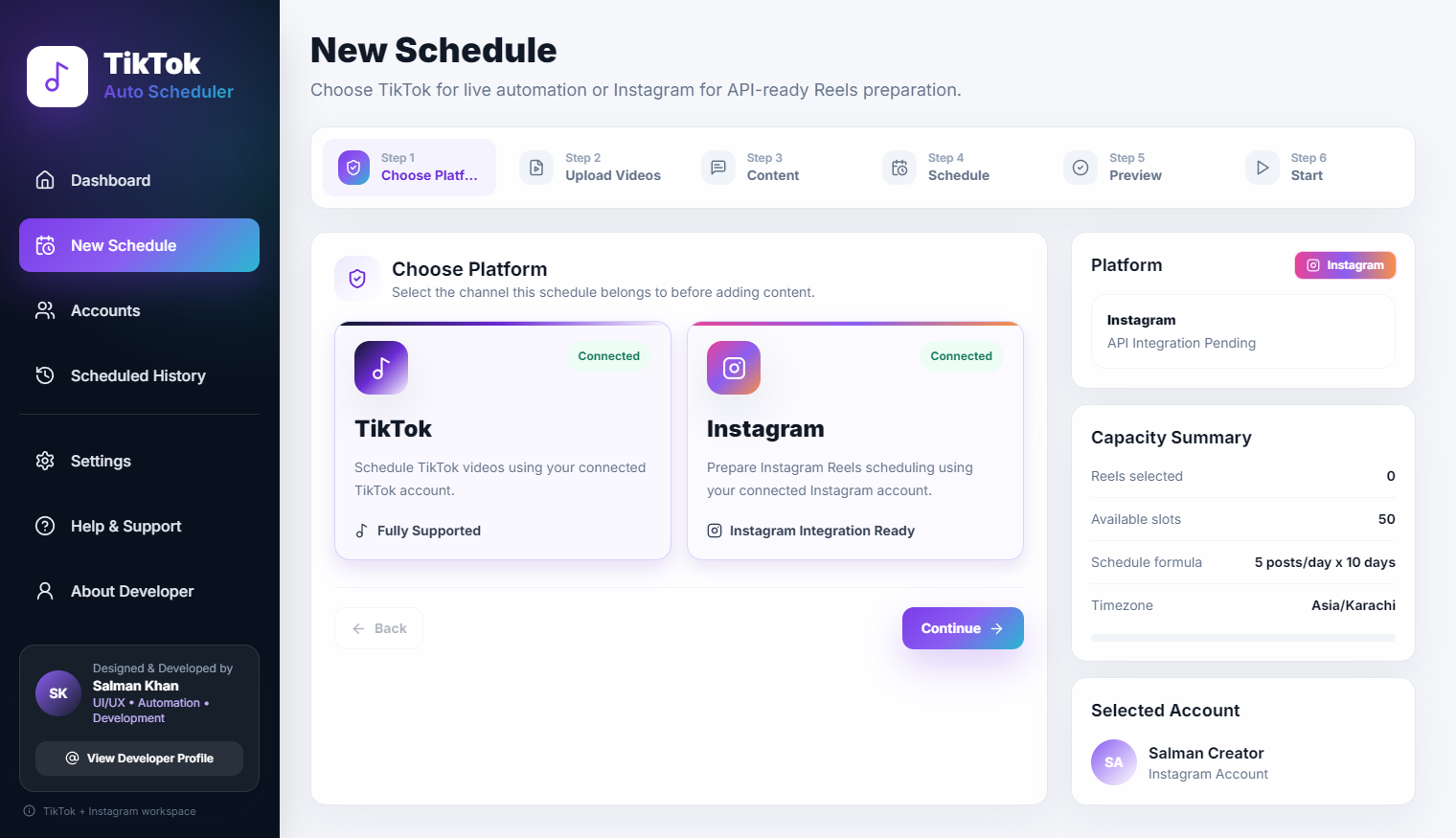
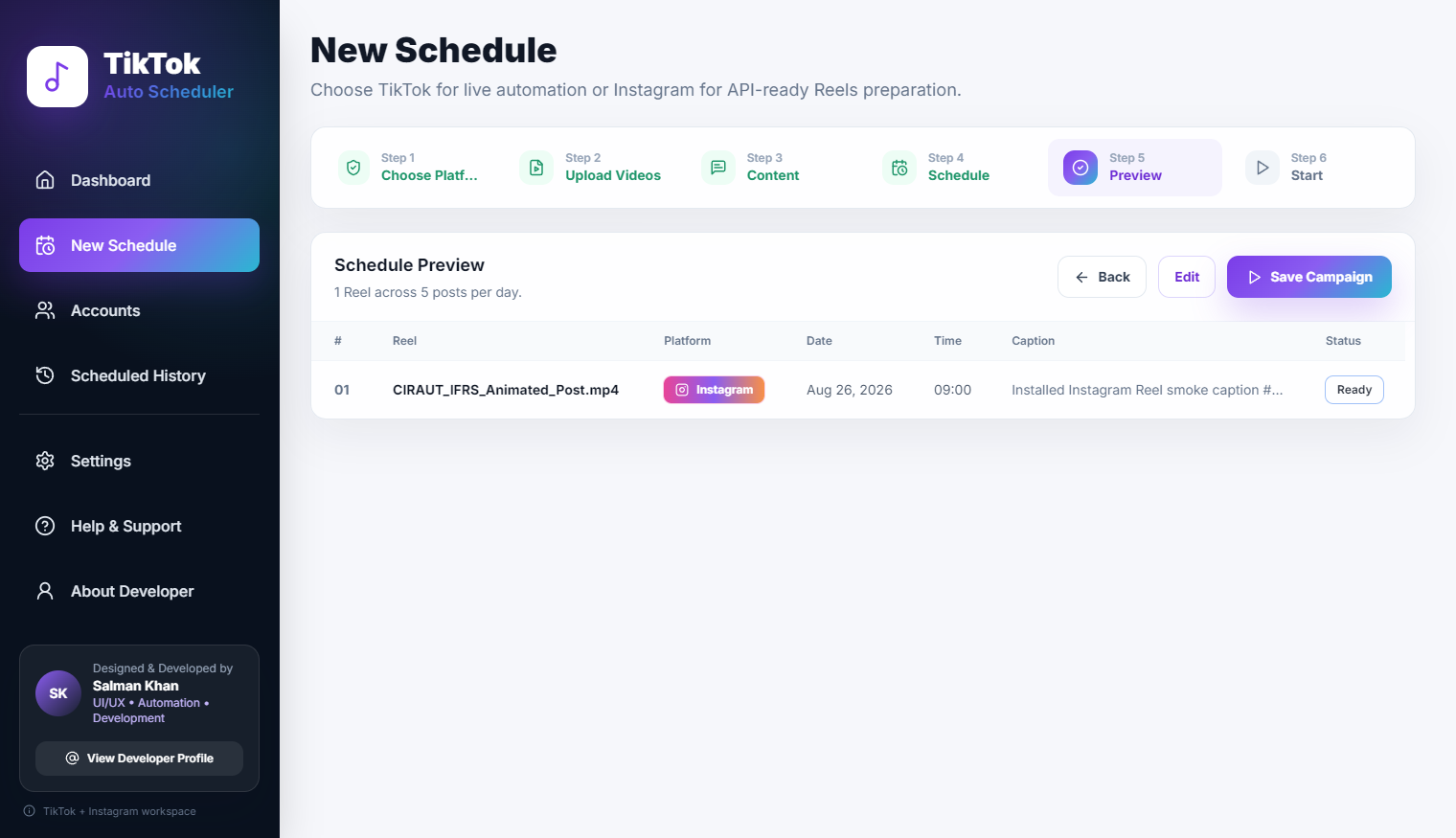
A robust scheduling queue is the backbone of any automated social media system. Instead of setting specific times for every single post, modern automation tools utilize 'drip' queues. You define the slots—for instance, 9 AM, 1 PM, and 6 PM every weekday—and simply drop content into the bucket. The system handles the chronological distribution.
This completely changes the workflow. You move from 'I need to post this on Tuesday at 4 PM' to 'Here is a batch of 50 approved videos, keep the queue full'. It creates a massive buffer, ensuring consistency even when you take a week off.
Multi-Account Workflows
Managing one account is straightforward. Managing fifty accounts for different clients or brands is a logistical nightmare. Multi-account workflows require strict isolation of sessions, proxies, and cookies to prevent platforms from flagging the accounts as spam.
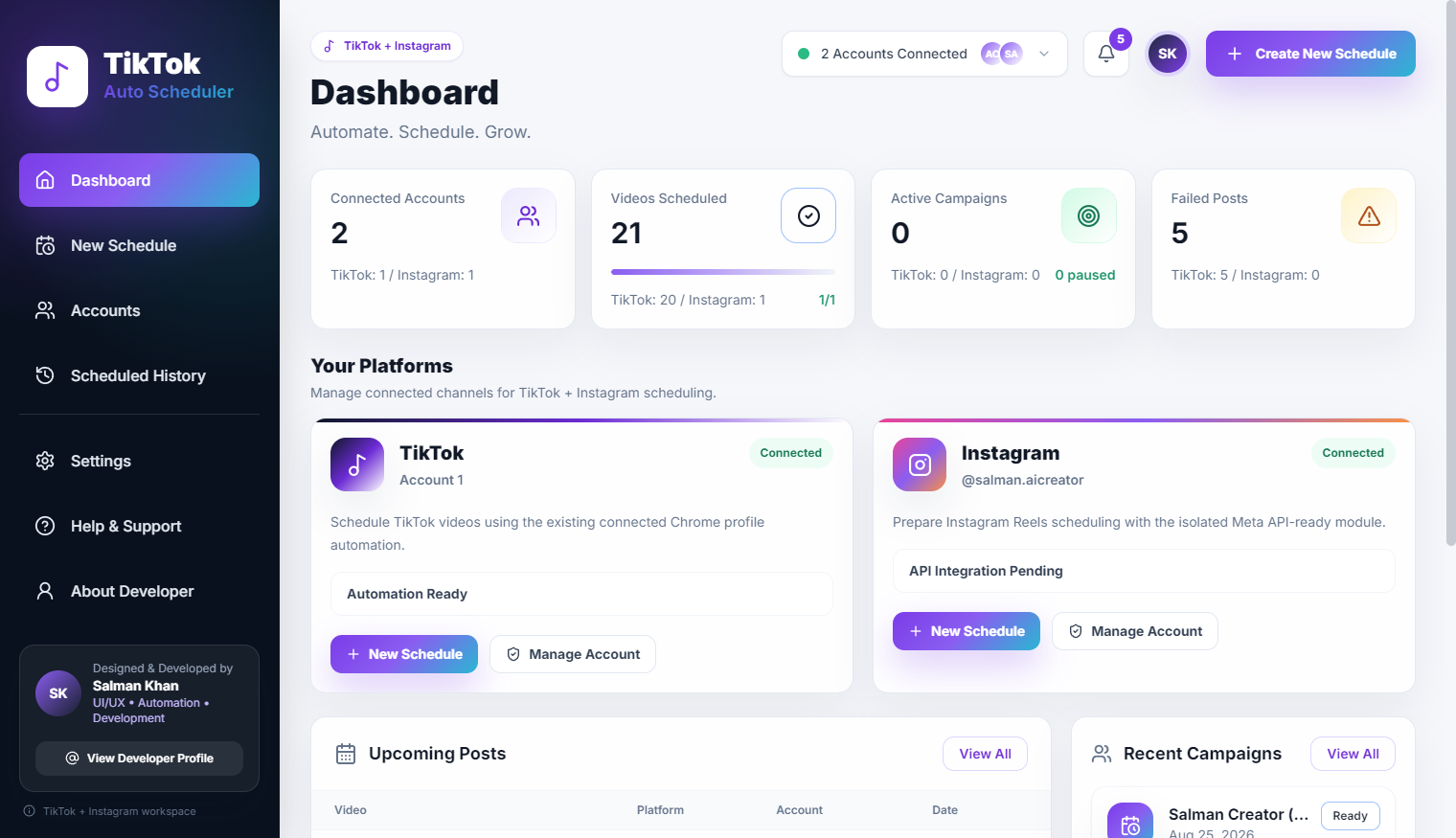
This is where custom desktop automation becomes necessary. By building software that securely manages these isolated environments, a single operator can oversee hundreds of publishing queues from one dashboard, without constantly logging in and out or risking account bans.
Why Strategy Still Needs Human Decisions
Despite all these capabilities, automation should never dictate strategy. An algorithm cannot understand the nuanced cultural context of a trending audio track, nor can it genuinely reply to a complex customer service complaint in the comments.
The goal of automation is to buy back the time needed for humans to do what humans do best: understanding the audience, crafting the narrative, and making strategic pivots when a campaign isn't landing. If you automate the creative process itself too heavily, the content becomes sterile and loses its connection with the audience.
Tracking Status and Failures
An automated system is only as good as its logging. When you are pushing hundreds of posts a week, things will break. Platform APIs change, tokens expire, and upload limits are reached. A proper automation system doesn't just try to post; it verifies.
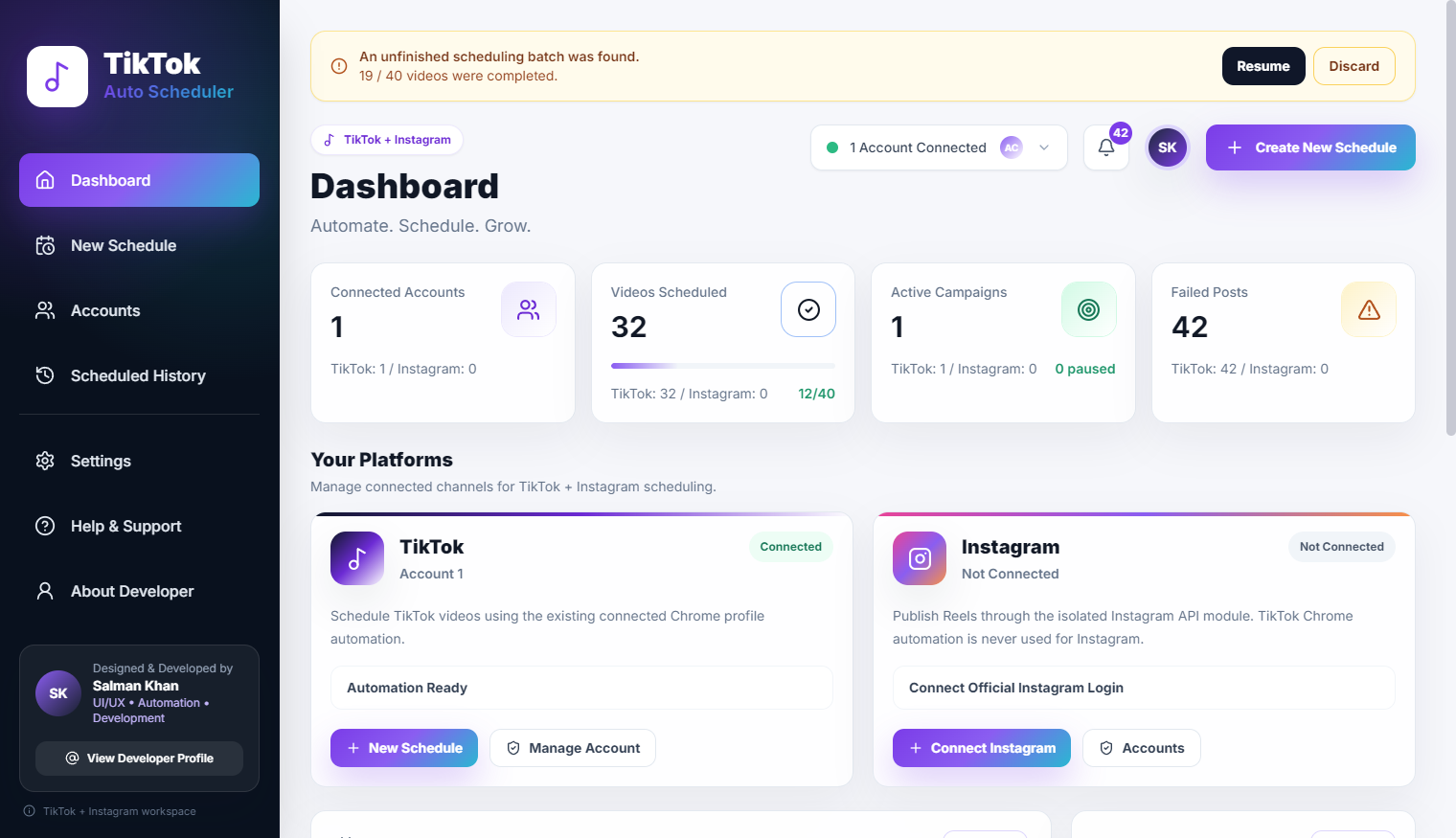
Clear dashboards showing exactly which posts succeeded, which are pending, and which failed (with human-readable error messages) are critical. You must be able to glance at the system and immediately know if an intervention is required.
Final Thoughts
The transition from manual social media management to automated workflows is a paradigm shift. It requires front-loaded effort to build the systems, map the data flows, and test the outputs. But once established, the leverage it provides is immense. It transforms social media management from an endless administrative chore into a scalable, strategic operation.